
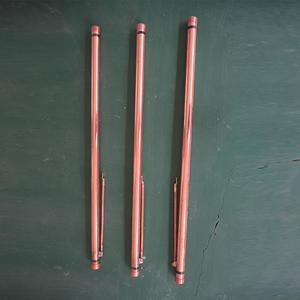
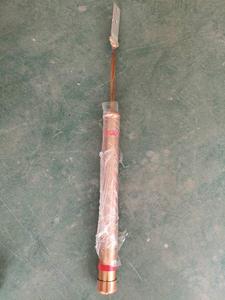
Copper-plated ion grounding rod
Title: Jiangsu 1m Copper-plated Ion Grounding Rod, DJ Electrolytic Grounding Electrode, Corrosion-resistant Electrolytic Ion Grounding Rod
Keywords: Single copper-plated ion grounding rod, combined copper-plated ion grounding rod, copper-plated electrolytic ion grounding rod, electrolytic ion grounding system, State Grid lightning protection grounding, power plant lightning protection grounding, substation lightning protection grounding, transmission line tower lightning protection grounding, high-speed rail and subway lightning protection grounding, subway station lightning protection grounding, transportation lightning protection grounding, highway lightning protection grounding, ECT lightning protection grounding, large chemical plant anti-corrosion grounding, wind power generation lightning protection grounding, photovoltaic power generation lightning protection grounding, communication tower lightning protection grounding, communication base station anti-static grounding, petrochemical anti-static grounding, oil depot anti-static grounding, computer room anti-static grounding, military base lightning protection grounding, bank lightning protection grounding, microwave relay station anti-static grounding, network computer room anti-static grounding, various high-rise building lightning protection grounding
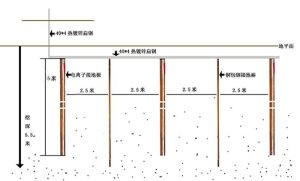

Distance: ≥5m
Temperature Range: -40℃~80℃
Product Certification: ISO9001:2000
Protection Level: IP64
Explosion-proof Function: None
Application Scope: Lightning protection grounding
Usage Environment: Any environment
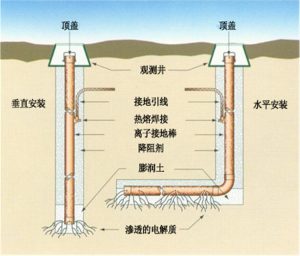
Installation Method: Vertical installation
The electrolytic ion grounding electrode is a new type of grounding material developed, manufactured, and serviced domestically using foreign technology. It is suitable for various locations with high grounding requirements and complex grounding projects. Compared with traditional grounding methods, it allows lightning impulse currents and fault currents to diffuse more quickly into the soil, resulting in a more significant grounding effect even under harsh soil conditions. The electrolytic ion grounding electrode utilizes four cutting-edge technologies: a moisturizing formula, slow-release ion release, deep grounding, and long-term resistance reduction. These technologies largely solve problems related to resistance reduction, corrosion resistance, and service life, giving the product significant advantages in various grounding performance and adaptability, making it suitable for a wide range of applications.
Materials and Applications:
The electrolytic ion grounding electrode is composed of advanced ceramic alloy compounds. The electrode exterior is made of copper alloy to ensure maximum conductivity and a long service life. It is filled with two types of fillers, one internal and one external. Experiments have shown that the direct cause of excessively high soil resistivity is the lack of free ions to assist in conductivity. The external backfill material is primarily composed of materials with strong water absorption, strong adsorption, and high cation exchange capacity, supplemented by various chemical materials that are long-lasting, resistance-reducing, corrosion-resistant, have a high expansion coefficient unaffected by temperature changes, and are resistant to high voltage impacts.
The electrolytic ion grounding electrode is mainly used to solve problems related to humidity, ion generation content, and corrosion protection around the grounding conductor. It ensures a tight bond between the conductor and the earth, thereby reducing the contact resistance between the electrode and the soil, improving the resistivity of the surrounding soil, and effectively enhancing the lightning conduction and release capability. The internal filling material of the conductor contains specially formulated electroionic compounds that can fully absorb moisture from the air. Through deliquescence, active ions are effectively released into the soil, reacting with moisture in the soil and air to further promote the slow-release and resistance reduction on the conductor’s exterior, maintaining a long-term stable resistance value. The compounds inside the conductor gradually combine over time to form a gel-like, transparent state. Utilizing the conductivity of these gel-like compounds, the entire system remains in a state of ion exchange for an extended period, thus forming an ideal electrolytic ion grounding system. After the slow-release filler is buried within the conductor, the grounding resistance gradually decreases, reaching a stable value within six months to one year, and the slow-release process can last up to 50 years.
Ion grounding electrodes, also known as electrolytic ion grounding systems or hollow grounding systems, are characterized by their small footprint, low construction difficulty, and long-lasting and stable resistance reduction effect. Their unique slow-release technology and corrosion resistance continuously improve the grounding resistance reduction effect, stabilizing at an optimal value.
Installation Method:
1. Drilling
Drill an 80mm*1200mm hole perpendicular to the ground at the selected construction site.
2. Inserting the Grounding Electrode
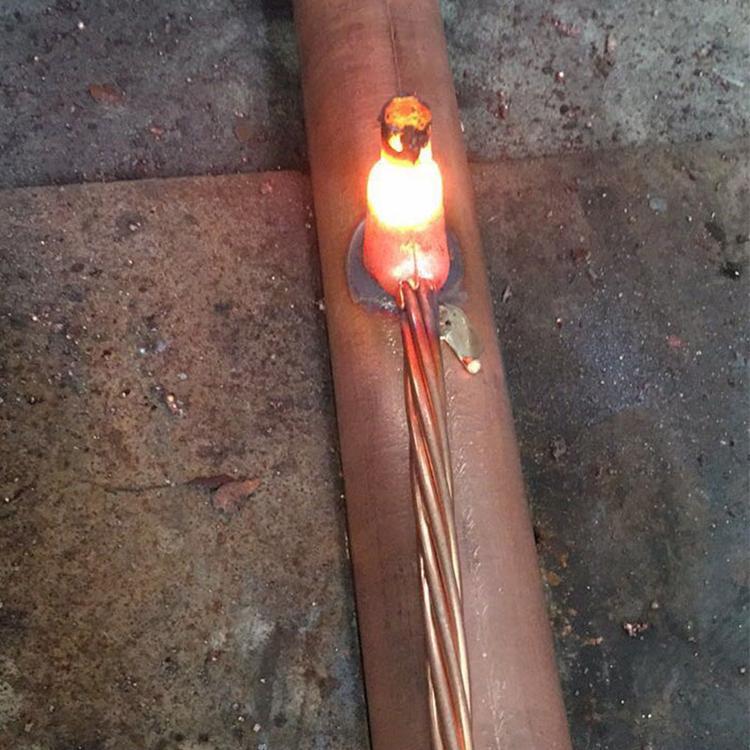
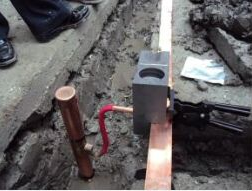
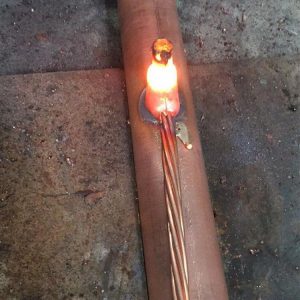
Connect the grounding electrode and the ground wire in parallel, ideally using thermoforming welding.
Technical Features:
1. Automatically adjusts and releases electrolyte.
2. Ensures the grounding electrode resistance meets minimum grounding requirements.
3. Effectively maintains minimum grounding requirements for a long period.
4. Service life up to 30 years with no maintenance required.
5. Contains no hazardous materials or chemicals, causing no negative impact on the environment and fully complies with international environmental standards.
6. Uses pure copper, ensuring technical and quality safety and reliability.
7. Unaffected by climate changes.
Application Scope:
Suitable for various geological conditions, especially for locations with high grounding requirements and complex grounding projects, offering excellent performance-price ratio. Widely used in the communications industry, power systems, building systems, military facilities, transportation systems, banking systems, computer systems, broadcasting systems and other industries for equipment grounding, AC/DC working grounding, and safety protection grounding.