
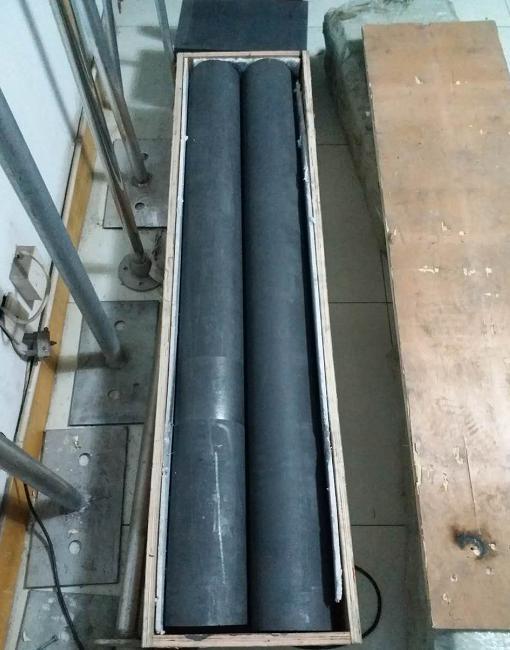
Cylindrical zero-ohm composite grounding electrode
Title: Cylindrical Zero-Ohm Composite Grounding Electrode, Military Composite Grounding Electrode, Zero-Ohm Resistance Reduction Grounding Electrode
Keywords: Zero-ohm grounding electrode, zero-ohm vertical composite grounding electrode, zero-ohm lightning protection grounding electrode, zero-ohm corrosion-resistant grounding electrode, high-conductivity zero-ohm grounding electrode, zero-ohm grounding electrode manufacturer, customized zero-ohm grounding electrode, substation composite grounding electrode, deep well grounding, wind turbine grounding, power plant lightning protection grounding, substation lightning protection grounding, electrified railway lightning protection grounding, telecommunications base station grounding, mobile communication base station grounding, microwave relay station grounding, ground satellite receiving station grounding, radar station lightning protection grounding, valuable precision instrument lightning protection grounding, computer room equipment lightning protection grounding, postal and telecommunications program-controlled equipment lightning protection grounding, radio and television equipment lightning protection grounding, electronic medical equipment lightning protection grounding, high-rise building lightning protection grounding, scenic spot and ancient building lightning protection grounding, tall memorial tower lightning protection grounding, oil pipeline lightning protection grounding, oil and gas tank lightning protection grounding, flammable and explosive material warehouse lightning protection grounding

Temperature: -40℃~80℃
Buried Depth: >0.6m
Module Spacing: 5m
Compressive Strength: ≥30Mpa
Flexural Strength: ≥13.5Mpa
Product Certification: ISO9001:2000
Protection Level: IP64
Explosion-proof Function: None
Application Scope: Lightning protection grounding
Usage Environment: Any environment
Product Features:
The development method of the “Zero-Ohm Composite Material Grounding Body” is meticulous, combining the advantages and disadvantages of traditional products, and through step-by-step research, it breaks through the traditional metal component connection to graphite modules, realizing the direct connection of graphite modules, and solving the problem of gaps appearing between metal products and graphite resistance-reducing modules after corrosion, leading to the interruption and failure of the graphite grounding network.
Product Advantages: Lightweight, low resistivity, excellent mechanical properties, good corrosion resistance, environmentally friendly and pollution-free, long service life, wide application range, small footprint; Product Disadvantages: High cost.
The main features are as follows:
1. Low bulk density: The density of the zero-ohm composite grounding system is only 1/5 that of copper, making it lighter and more convenient to carry.
2. Low resistivity: The conductivity of the zero-ohm composite grounding electrode is nearly 100 times higher than that of ordinary non-metallic minerals, surpassing that of a good metallic conductor (pure copper, etc.). This facilitates the construction of high-quality grounding grids and makes it less susceptible to theft.
3. The compressive strength of this invention is not less than 30 MPa, allowing for thorough compaction during grounding grid construction and improving the discharge of large surge currents.
4. Flexural strength is not less than 13.5 MPa: During grounding grid construction, the zero-ohm composite grounding electrode exhibits good toughness and is not easily damaged. 5. Excellent corrosion resistance: Because the components of the zero-ohm composite grounding system are manufactured through high-temperature sintering and electrolysis, they are filled with numerous dense pores. Impurities cannot easily penetrate the graphite, and the molecules in the soil are unlikely to undergo chemical reactions with the graphite molecules. The product structure itself provides excellent protection, making it particularly suitable for grounding in dry soils.
6. The components of the zero-ohm composite grounding system are produced through high-temperature electrolysis, eliminating all harmful impurities. They are chemically inert, non-polluting, insoluble in water, dilute acids, dilute alkalis, and organic solvents, and will not alter the surrounding soil, making them suitable for many special and demanding environments.
7. Packaging in cardboard boxes or wooden crates saves on transportation costs.
8. Long lifespan: The components of the zero-ohm composite grounding system undergo high-temperature electrolysis treatment, resulting in highly stable chemical relationships between molecules. Therefore, the product is not easily corroded, has a long lifespan, is not easily broken, and can last for more than 50 years. 9. Utilizing stable graphite-type non-metallic conductor material as the conductive medium, its conductivity is unaffected by seasonal changes.
10. It absorbs and retains moisture, maintains effective contact with the soil, and has low grounding resistance.
11. In areas with high soil resistivity, it effectively reduces the grounding resistance of the grounding grid.
12. It withstands high power frequency and impulse current surges, maintaining stable resistance.
13. It is corrosion-resistant, non-toxic, has a long service life, and is easy to install.
14. Connection materials include graphite bolts, flexible graphite wire, galvanized flat steel, copper-plated flat steel, pure copper conductors, and tin-plated copper. Welding methods include bolt connections, electric welding, and thermoforming welding, making construction simple and convenient.
15. The zero-ohm composite material grounding electrode can be used as both a vertical and horizontal grounding electrode, offering flexible application. Detailed introduction of “0-ohm grounding electrode, 0-ohm resistance reduction material, lightning protection grounding material”
1. Superior resistance reduction performance
(1) Low contact resistance with soil
The non-metallic body of the non-metallic ion grounding electrode is a good conductor with strong soil affinity and a large volume. Therefore, the contact area between the non-metallic ion grounding electrode and the soil is large, resulting in low contact resistance.
(2) Good water absorption and retention performance
The ion chamber contains high-molecular conductive ion material; the non-metallic ion grounding electrode has many capillaries. Both the capillaries and the conductive ion material have strong water absorption. During the rainy season or when the soil moisture is high, the ion grounding electrode can collect and store rainwater and soil moisture, forming a unique “micro-reservoir” inside the non-metallic ion grounding electrode; during the dry season or when the soil moisture is low, the non-metallic ion grounding electrode can replenish the surrounding soil with moisture and conductive ions to maintain soil moisture and enhance soil conductivity. (3) It can form unique conductive channels that penetrate deep into the soil, expanding the discharge area. When the conductive ion material inside the ion grounding body is hydrolyzed and continuously released and permeates into the surrounding soil through capillaries, countless unique root-like conductive channels are formed around the grounding body, penetrating deep into the soil. This channel will effectively improve the current dissipation effect of the ion grounding body, expand the discharge area, and effectively reduce the grounding resistance. 2. Super strong discharge capacity (1) Extremely low resistivity. The non-metallic grounding body makes full use of the conductivity of high-purity graphite. The resistivity of the formed non-metallic body is 10-50 μΩ·m, close to the conductivity level of metals. At the same time, the resistivity of the non-metallic body is very stable and is not affected by changes in external temperature and humidity. (2) Excellent thermal stability and strong current discharge capability. The melting temperature of the non-metallic body can reach 3000-4000℃, and the boiling point is 4250℃. Even after being burned by ultra-high temperature electric arc, the coefficient of thermal expansion is very small. In addition, the resistivity of the non-metallic body itself is extremely low, and the contact area with the soil is large. Therefore, the non-metallic ion grounding body can withstand hundreds of kiloamperes of lightning and thousands of amperes of short-circuit current without damage. When a large current impacts, the grounding body and the unique conductive channel can quickly and effectively release the charge, avoiding high ground potential backlash. It is particularly suitable for power lines, substations, power plants, chemical plants, key laboratories, communication base stations, gas fields and other places with high requirements for instantaneous current discharge. 3. Ultra-long service life (1) Superior corrosion resistance. The non-metallic body will not corrode. We use special processes to treat the metal terminals of the grounding body. An isolation layer is used at the contact surface between the metal terminals and non-metallic materials to prevent the penetration of moisture and conductive ions, and to increase the potential of the metal terminals in the soil, ensuring that the service life of the ion grounding body is much longer than that of the copper ion grounding electrode. In addition, the reinforced external additive formula of the non-metallic ion grounding body contains protective agents, which can greatly alleviate the corrosion of the metal terminals and the grounding grid, thus extending the service life of the grounding system.
(2) Good low-temperature operating characteristics
In low-temperature environments, the freezing point of conductive ion materials is an important indicator. Through multiple experiments and formula adjustments, we have controlled the freezing point of conductive ion materials to below -20℃, which can meet the needs of most frozen soil environments.
(3) High strength
During transportation and storage, if exposed to high temperatures, direct sunlight, excessive dryness, rain, water immersion, or long-term storage, the ion grounding body will not crack, deform, or disintegrate, greatly facilitating transportation, storage, and construction. Product Applications:
1. Working grounding, safety grounding, and lightning protection grounding for power plants, substations, switch stations, explosives depots, high-voltage transmission lines, electrified railways, telecommunications and mobile communication base stations, microwave relay stations, ground satellite receiving stations, radar stations, etc.
2. Working grounding and protective grounding for valuable precision instruments, computer room equipment, postal and telecommunications program-controlled equipment, broadcasting and television equipment, electronic medical equipment, etc.
3. Lightning protection grounding for various high-rise buildings and tall structures, scenic spots and ancient buildings, tall memorial towers, etc.
4. Lightning protection grounding for oil pipelines and oil and gas tanks, and warehouses for flammable and explosive materials.