
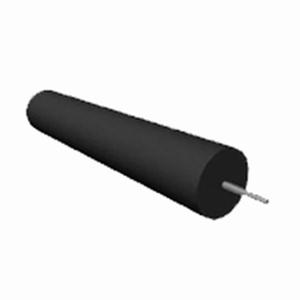
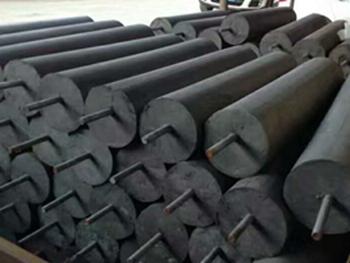
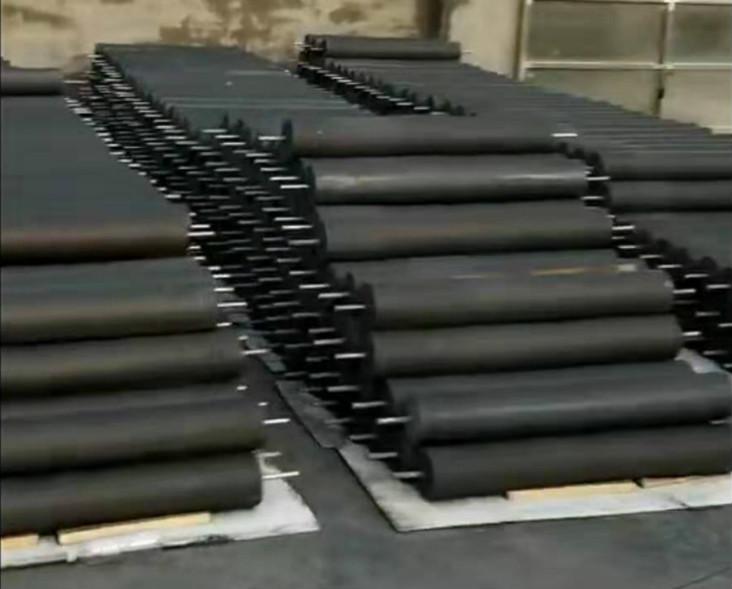
Cylindrical grounding module
Title: Cylindrical Grounding Module, CDM Series Grounding Module, Jiangsu Physical Grounding Module
Keywords: High conductivity grounding module, non-metallic low resistance grounding module, lightning protection grounding material, high-content grounding module, hydropower station lightning protection grounding module, South-to-North Water Diversion Project special lightning protection grounding module, cylindrical grounding module manufacturer, production of cylindrical grounding modules, power lightning protection grounding, communication lightning protection grounding, railway lightning protection grounding, building lightning protection grounding module, mining lightning protection grounding module, chemical lightning protection grounding electrode, national defense lightning protection grounding, factory lightning protection grounding, warehouse lightning protection grounding
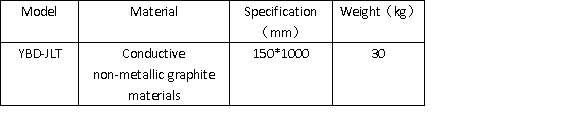
Temperature: -40℃~80℃
Buried Depth: >0.6m
Module Spacing: 5m
Product Certification: ISO9001:2000
Protection Rating: IP64
Explosion-proof Function: None
Application: Lightning protection grounding
Usage Environment: Any environment
Cylindrical Grounding Module: A cylindrical vertical grounding resistance reduction module, this grounding body is primarily composed of non-metallic conductive materials, consisting of non-metallic minerals and metal electrodes with good conductivity and stability. It can be widely used in various fields for working grounding, protective grounding, anti-interference grounding, lightning protection grounding, and anti-static grounding facilities, effectively reducing grounding resistance and ensuring long-term stable grounding performance. This product has been tested by the Wuhan High Voltage Research Institute of the State Grid Corporation of China, and all technical indicators meet the technical requirements. The evaluation results can be found in the test report of the Wuhan High Voltage Research Institute of the State Grid Corporation of China.
Cylindrical modules can be vertically buried at a depth greater than 0.6m, with a module spacing of 5m. Multiple modules can be connected using linear or ring connections depending on the actual site conditions. If limited by the construction site, the module spacing can be appropriately reduced. [Vertical Grounding Module Installation Steps]:
1. Estimate the required number of grounding modules based on calculations, allowing for a 5%~10% margin of error, to arrive at the total required number of grounding modules.
2. Distribute the grounding electrodes evenly across the usable land area, marking the lines on the ground to prepare for construction. The spacing between each grounding module should ideally be no less than 4m. If this spacing requirement cannot be met during actual use, the utilization factor should be calculated using the lower value.
3. Manually dig pits according to design requirements. The depth should be as per design specifications, generally requiring the module to be 0.8-1.0m below ground level. The pit diameter should be chosen for ease of construction, and the pit depth should be the module length plus 0.8m.
After digging the pits, apply a layer of resistance-reducing agent to the bottom surface (to increase the contact area between the grounding module and the soil, enhancing conductivity). Then, place the module flat on top of the resistance-reducing agent and compact it firmly.
4. Fill the bottom of the pit with a small amount of fine soil, backfilling to a depth of approximately 10cm, and compact it. Place the grounding module and backfill with fine clay. Water should be sprinkled and compacted layer by layer during backfilling. Backfill with fine clay until the module is completely buried in the soil. If there is no water, wait until seasonal rains arrive and the soil and module are in close contact. After the module absorbs water and releases electrolytes, its resistance reduction effect will be more significant.
V. Weld the module electrodes to the horizontal grounding grid. After welding, perform anti-corrosion treatment as required.
VI. If connecting to the horizontal grounding grid using connecting clips, secure with bolts and apply conductive anti-corrosion coating.
Compared to traditional grounding electrodes, cylindrical modules have the following significant advantages:
(1) Reduced contact resistance: The main material of the grounding module has a similar physical structure to the soil, allowing it to integrate with the soil. This makes the effective contact area between the grounding electrode and the soil many times larger than that of a metal grounding electrode, increasing the effective current dissipation area and greatly reducing the contact resistance between the grounding electrode and the soil. Therefore, it can significantly improve grounding efficiency and reduce the land area occupied by the grounding grid.
(2) Stable Grounding Resistance: The cylindrical grounding module itself has strong moisture absorption and retention capabilities, keeping the surrounding soil moist and ensuring the effective conduction of the grounding module. Simultaneously, the conductivity of the conductive materials in the grounding body is unaffected by seasonal changes in humidity, temperature, etc., thus providing a stable grounding resistance.
(3) Reduced Ground Potential Rise: The non-metallic materials of the cylindrical grounding module create a relatively smooth, low-resistivity region between the metal and soil, where resistivity differs significantly. During high-current surges, this reduces the transient potential gradient of the grounding body and grounding wire, lowering step voltage and contact voltage, and reducing the probability of ground potential rise.
(4) Long Service Life: The main body of the cylindrical grounding module is made of corrosion-resistant material, and its metal frame uses surface-treated corrosion-resistant metal. Therefore, the overall corrosion resistance of this grounding body is excellent, with a service life exceeding fifty years. Applications:
Widely used for lightning protection grounding, working grounding, and anti-static grounding of facilities in power, telecommunications, railway, construction, mining, chemical, national defense, various factories, warehouses, etc., especially suitable for areas and occasions with high soil resistivity.