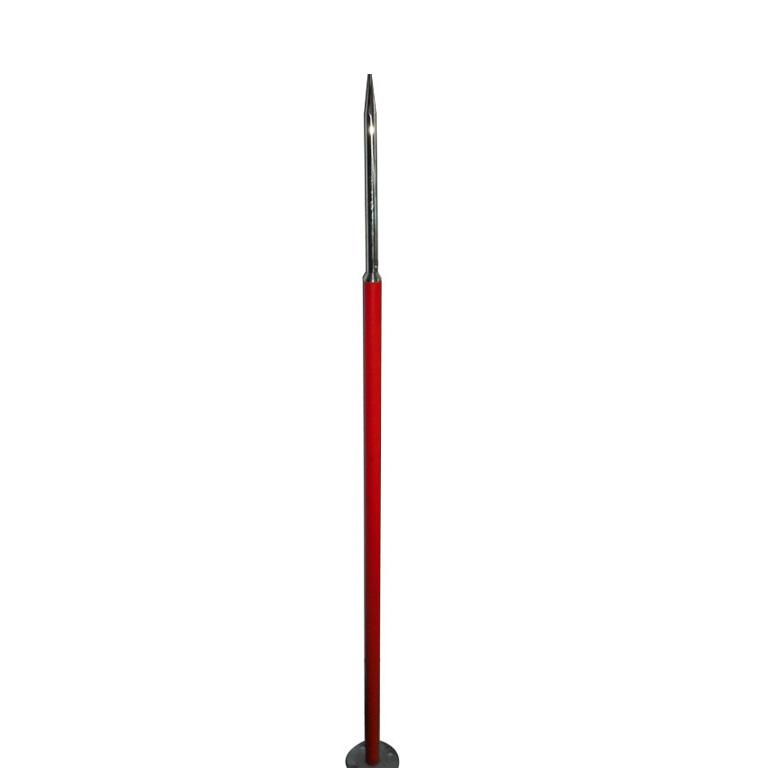
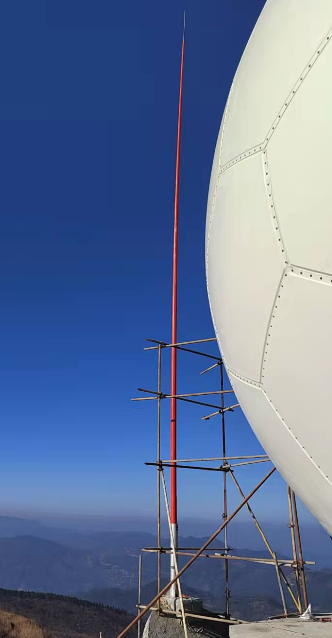
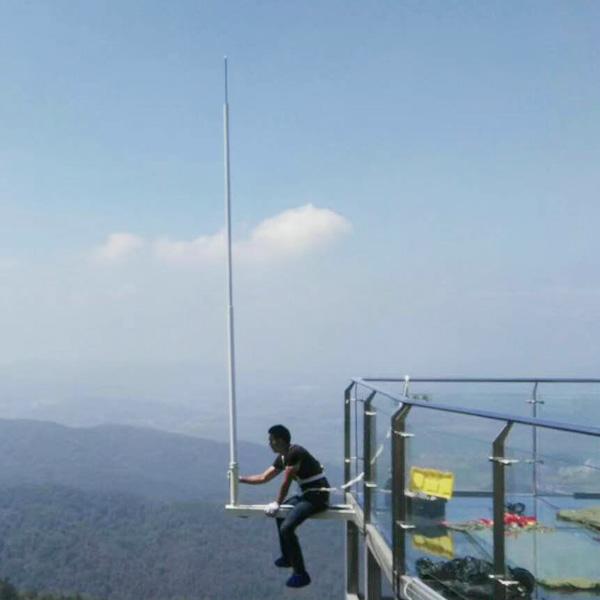
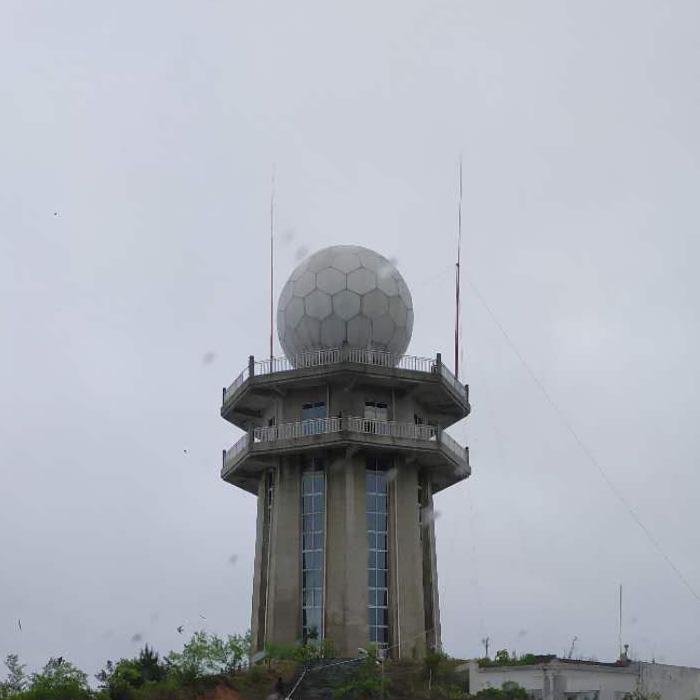
FRP lightning rod
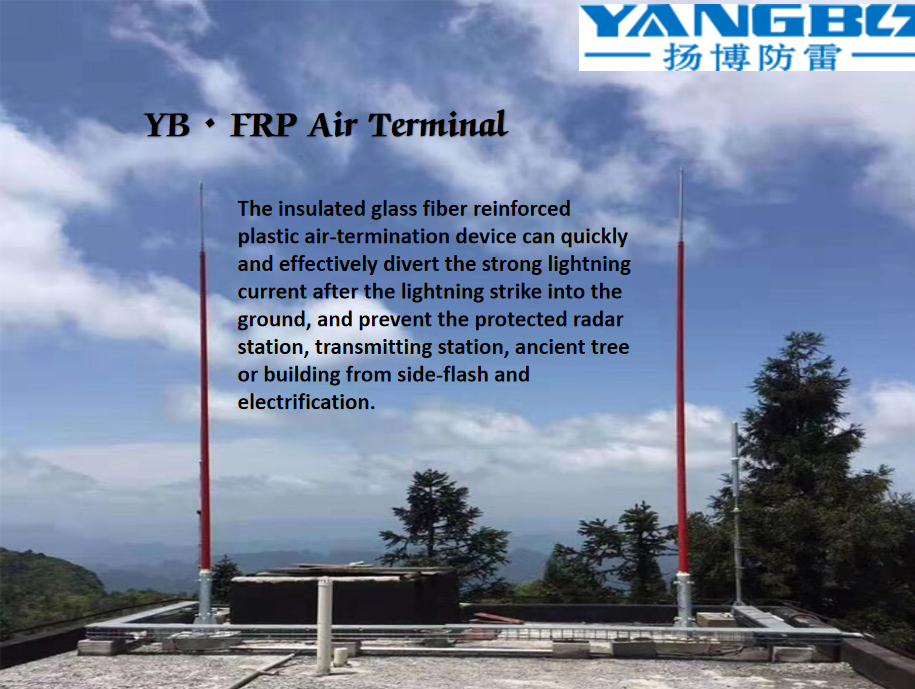
Classification of FRP lightning rod:
- Airport FRP lightning rod 2. Weather station radar station fiberglass lightning rod
The difference between the two is that airport fiberglass lightning rods break easily (preventing aircraft and other equipment from hitting, weighing the pros and cons,
The lightning rod of weather station radar station is not easy to break.
The FRP lightning rod is passive and radiant, and its energy is derived from the electric potential between the stratum and the cloud before the lightning occurs
Difference, the components include: the center axis, the upper electrode, the discharge trigger device, the bottom electrode.
Main characteristics of FRP lightning rod:
- It does not affect the electromagnetic wave transmission of the new generation Doppler weather radar and is not affected by any other lightning rod.
- Light weight, corrosion resistance, high strength, strong wind resistance, wind speed resistance: 40m/s-60m/s.
- Glass fiber reinforced plastic insulation, temperature resistance-60 ℃-80 ℃.
- Accurately discharge ahead of time, and fully active lighting.
- Unde that same condition, the coverage area of the lightning rod is wide than that of the ordinary lightning rod.
- Safe, reliable and maintainable.
FRP lightning rod is non-radioactive, corrosion-resistant and wind-resistant. Passive, energy-consuming components, which are immune to surges and have a long life.
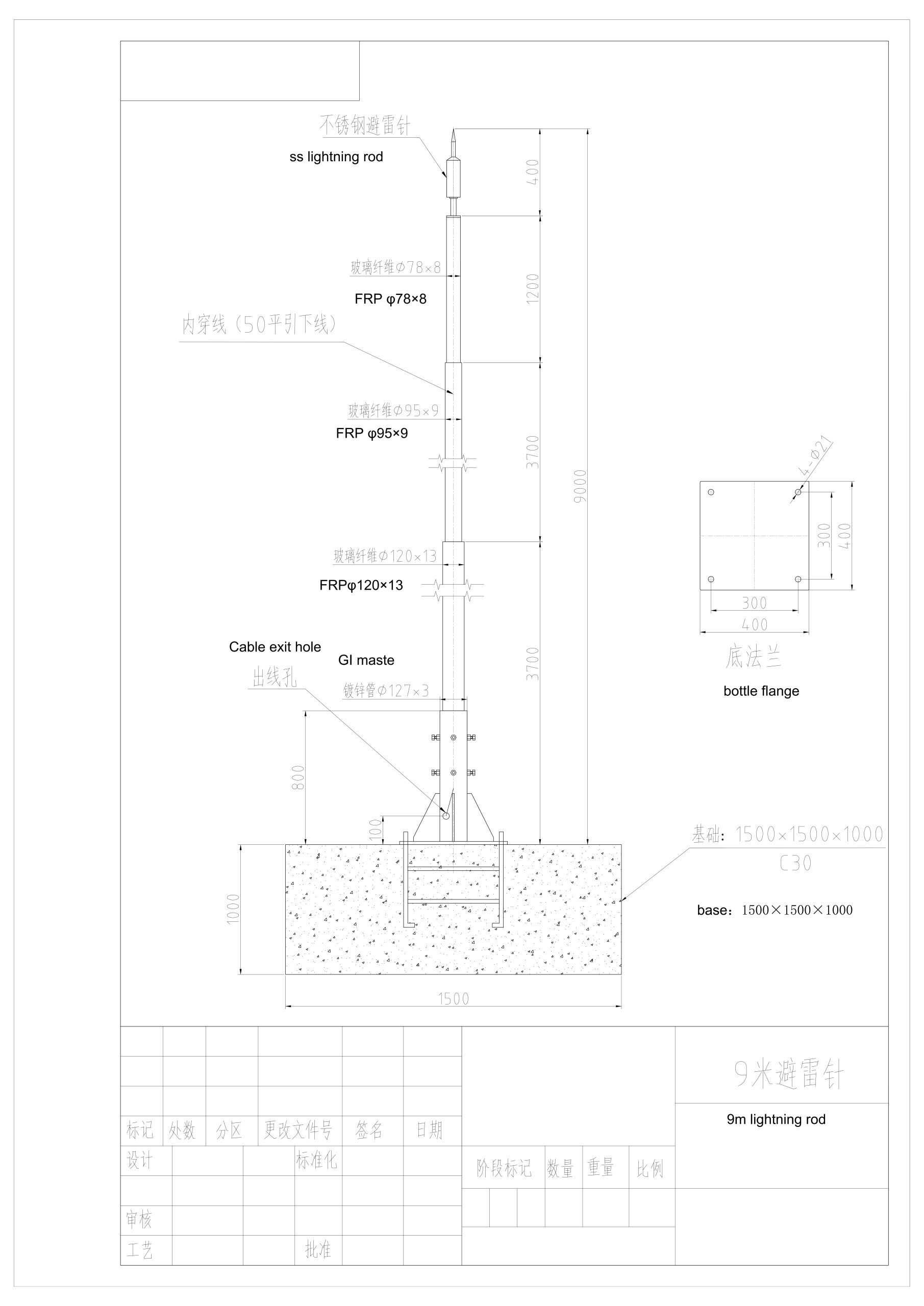
FRP lightning rod is mainly a new type of FRP lightning rod specially developed and produced in various microwave communication stations, radar stations, weather stations and other places. It is made of glass fiber reinforced plastics, the needle height is 11m/13m/15m/17m/19m/21, the height can be customized according to the customer’s requirements, and the protection range is calculated according to the ball radius method GB50057.
| Serial Number | Name | Height |
| 1 | YB-Z20-9 | 9M |
| 2 | YB-Z20-10 | 10M |
| 3 | YB-Z20-11 | 11M |
| 4 | YB-Z20-13 | 13M |
| 5 | YB-Z20-15 | 15M |
| 6 | YB-Z20-17 | 17M |
| 7. | YB-Z20-18 | 18M |
Specification for FRP lightning rods:
QX/T2-2016 Technical Specification for Lightning Protection of New Generation Weather Radar Stations
GB50057-2010 Code for design of lightning protection of buildings
Technical specification for detection of lightning protection devices for buildings
GB50054-2011 Code for design of low-voltage power distribution
GB50311-2007 Code for design of integrated wiring system engineering
GB50601-2010 Code for lightning protection construction and quality acceptance of buildings
Technical Specification for Lightning Protection of QX4-2014 Meteorological Observatory (Station)
QX/T100-2009 Technical Specification for Location of New Generation Weather Radar Stations
Classification of lightning protection grade for FRP lightning rod
The classification of lightning protection grade of radar station shall be based on the corrected value (Nr) of the annual average density of lightning strike ground at the location of radar station.
To determine the value of Nr shall be calculated as specified in Appendix A, and the grounding resistance shall be 4.
The lightning protection grade of radar station is shown in the table:
| Modified value of annual average density of lightning strike earth (Nr) | Lightning protection grade |
| Nr > 8 | First class |
| 8 ≥ Nr > 3 | Second class |
| Nr ≤ 3 | Third class |
Principle of FRP lightning rod:
Lightning arrester (lightning rod) is a non-inductive, low resistance metal conductor lead-down wire. In thunderstorms, when clouds appear over tall buildings, lightning rods and rooftops can induce large amounts of electric charge. Because the tip of the lightning rod is sharp, the conductor tip always accumulates the most electric charge in electrostatic induction.
Lightning arrester (lightning rod) is a non-inductive, low impedance metal conductor lead-down wire. In thunderstorms, when clouds appear over tall buildings, lightning rods and the tops of tall buildings can induce large amounts of electric charge. Because the tip of the lightning rod is sharp, the conductor tip always accumulates the most electric charge in electrostatic induction. In this way, the lightning rod accumulates most of the charge. The lightning rod forms a capacitor with the charged layers, which is small in capacitance because of its sharp tip, which means that the capacitor has a small positive array of plates, which means that it can hold very little charge. As it accumulate most of that charge, the air between the lightning rod and the cloud can easily be broken down to become a conductor when there is more charge on the lay. This charges the layer to form a path, and the lightning rod is grounded. The lightning rod can lead the electric charge on the cloud to the earth, so that it does not pose a danger to the high-rise buildings, ensuring its safety.
The lightning rod transmits the lightning current after the lightning connection to the ground through the lower lead wire and the main lightning protection lower lead wire of the building, and prevents the protected antenna tower from side-striking and electrifying the building. The lightning rod transmits the lightning current after the lightning connection to the ground through the lower lead wire and the main lightning protection lower lead wire of the building. In most cases, the impact of the static electric field cable is less than 1/10 of the impedance of the tower, which avoids the electrification of the ring tower and eliminates the flashover.
FRP lightning rodinstallation diagram