
Magnesium alloy ion grounding rod
Title: Magnesium Alloy Ion Grounding Rod, Magnesium Alloy Electrolytic Ion Grounding Electrode, Corrosion-Resistant Grounding Grid
Keywords: Multi-element alloy grounding electrode, ion slow-release grounding electrode, magnesium alloy corrosion-resistant grounding electrode, single magnesium alloy ion grounding rod, combined magnesium alloy ion grounding electrode, new magnesium alloy ion grounding body, high conductivity ion grounding rod, low resistance ion grounding electrode, electrolytic ion grounding system, long-lasting ion grounding body, superconducting corrosion-resistant grounding electrode, composite nano-corrosion-resistant grounding device, lightning protection grounding system, high-quality lightning protection grounding body, latest ion grounding body, deep well ion grounding electrode, booster station lightning protection grounding body, mixing station corrosion-resistant grounding electrode, chemical plant corrosion-resistant grounding electrode, pipeline corrosion-resistant grounding electrode, light rail lightning protection grounding electrode, petrochemical lightning protection grounding, power lightning protection grounding, natural gas oilfield lightning protection grounding, oil refinery lightning protection grounding, oil tank area lightning protection grounding, etc. However, lightning protection grounding for various applications is available, including: gas pipelines, coal chemical plants, phosphorus chemical plants, State Grid, high-voltage transmission lines, substations, high-speed rail, subways, wind power generation, photovoltaic power generation, communication towers, transportation systems, computer rooms, highways, ECT (Electronic Toll Collection) systems, military bases, banks, airports, museums, schools, large stadiums, shopping malls, scenic areas, the Three Gorges Dam, Yellow River power stations, office buildings, television stations, radar stations, and dedicated ion grounding bodies for substations.
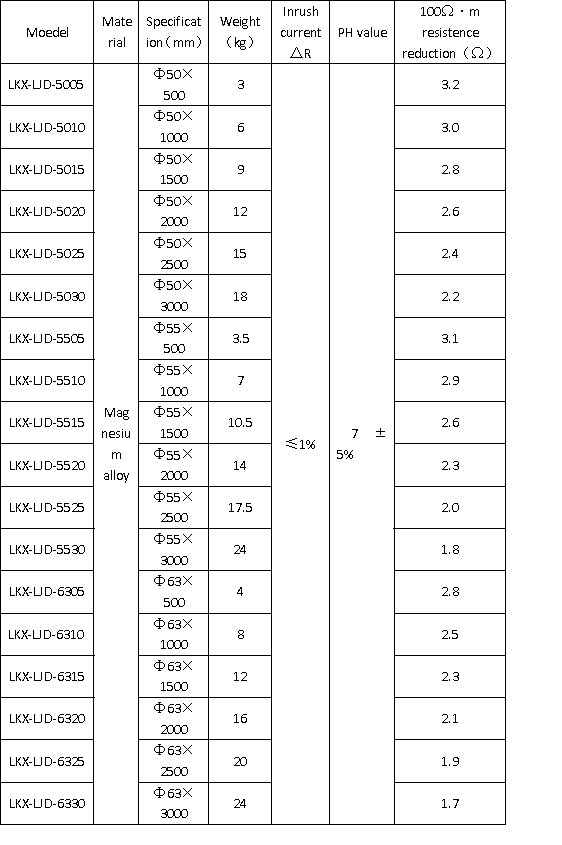
Distance: ≥5m
Temperature range:-40℃~80℃
Product certification: ISO9001:2000
Protection level: IP64
Explosion-proof function: none
Scope of use: lightning protection grounding
Usage environment: any environment
Product introduction:
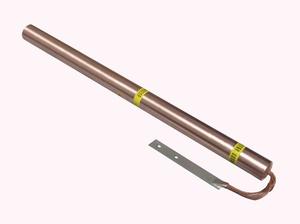
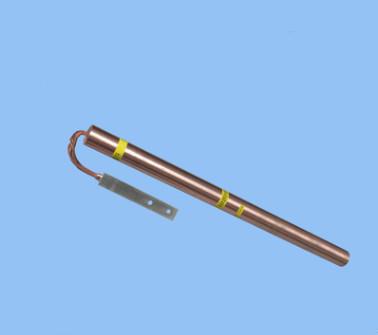
The electrolytic ion ground electrode (magnesium alloy) with a diameter of 63mm is the second generation of grounding resistance-reducing and anti-corrosion ion ground electrode.
The technical breakthrough points are small footprint, low construction difficulty, long-lasting and stable resistance reduction and anti-corrosion effects. its unique
The resistance reduction technology and anti-corrosion performance continuously improve the resistance reduction effect of grounding and are suitable for different geological conditions.
It is especially suitable for places with high ground resistance, high grounding requirements and difficult grounding engineering.
Excellent value for money. This product is suitable for all lightning protection grounding projects.
How it works:
1. Principle of resistance reduction
Ground resistance is a function of the resistivity of the earth as well as the shape and size of the electrodes. thus reducing soil electricity
Resistivity is one of the ways to reduce ground resistance.
The ground resistance-reducing anti-corrosion ion electrode uses the principle of reducing the resistivity of the soil around the ground electrode.
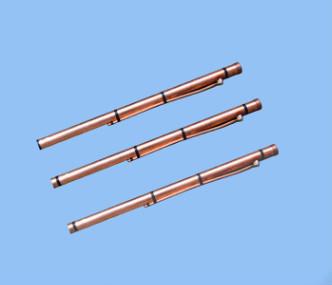
Developed with anti-corrosion function and new technology. The electrolytic ground electrode is composed of Φ63mm copper tube, with a total of 4-12 electrodes.
Suction and drainage holes. The electrolytic electrode tube is filled with environmentally friendly physical compounds so that it can fully function when buried underground.
Absorbs moisture from the soil and air, and slowly discharges electrolytes outward from the respiratory excretion holes through deliquescence.
The solution can effectively and permanently reduce the resistivity of the soil around the grounding electrode.
2. Anti-corrosion principle
The grounded resistance-reducing anti-corrosion ion electrode uses the principle of macroscopic battery corrosion to combine two kinds of metal in different positions.
The metals are combined together to form a battery in which the base metal becomes the anode and the noble metal becomes the cathode. The anode will be subjected to
corrosion.
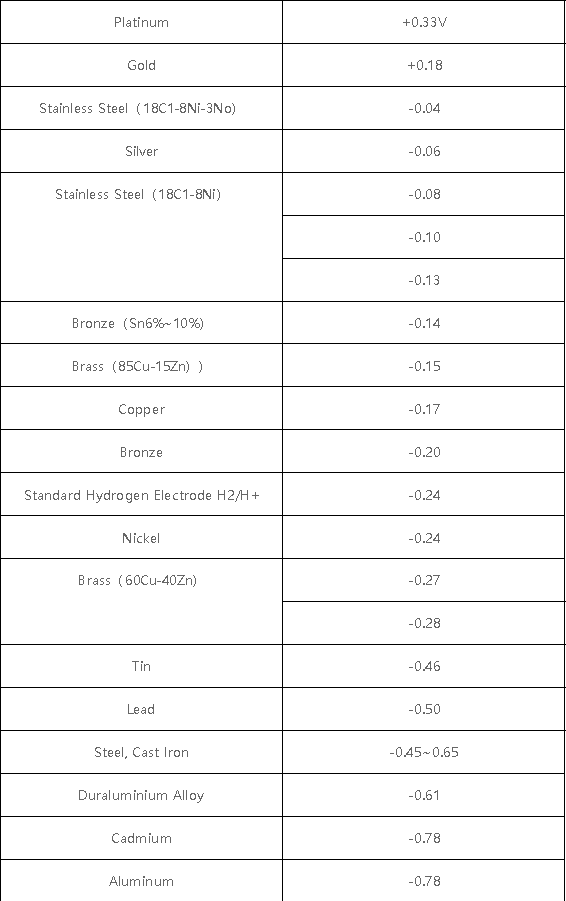
It can be seen from a piece of potential data (Table 1) using a saturated calomel electrode as a reference electrode to measure metals in seawater.
It can be seen that using magnesium as an anode and sacrificial anode to protect the grounded metal is one of the most suitable methods.
Product features:
1. It will not dissipate due to rain or groundwater in a short period of time and has good durability;
2. Since magnesium has the lowest potential, using magnesium alloy as anode will have minimal impact on adjacent metal structures;
3. Low operating costs, zero-cost maintenance, one-time investment, long-term benefits;
4. Good adsorption performance eliminates the contact resistance between the ground electrode and the soil and improves the electric field in the ground.
distribution;
5. Good permeability, penetrates deep into the soil and rock crevices, forming a network of tree roots, increasing leakage in the ground.
flow area;
6. The filler is a non-toxic compound and does not pollute the environment.
Construction Guide:
1. Drilling:
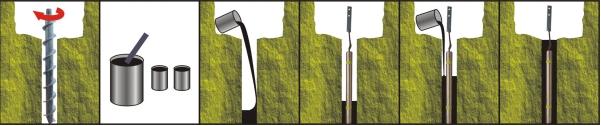
Excavate a circular pit at the selected construction site based on the selected product, and drill holes vertical to the ground in the pit.
hole.
2. Prepare filling materials:
⑴. Put the corresponding fresh water (well water or tap water) into the volume. The ratio of water to filler is 0.4
~0.6:1.
⑵. Add special high-energy fillers, usually long-lasting anti-corrosion and resistance-reducing agents (long-lasting ion agents: long-lasting preservatives
: Active ion agent = 25:25:1), stir until it becomes a paste.
3. Take out the electrolytic ion ground electrode from the package and check whether the product is complete (the electrolytic ion ground electrode is
A piece of 95mm2 copper wire is welded to the end, and a piece of galvanized flat iron is welded to the copper wire, with two diameters cut out on it.
It is a 12mm round hole, and the hole center distance is 63mm).
4. Remove the sealing tape at both ends and in the middle of the electrolytic ion ground electrode (the sealing tape is used to seal the vent hole.
The vent hole effectively releases active electrolytic ions into the soil through deliquescence, making the ground electrode a
Ion generating device, thereby improving the surrounding soil quality to meet the grounding resistance reduction requirements).
5. Fill the bottom of the hole with one-quarter of the prepared filling.
6. Implant the electrolytic ion ground electrode into the hole so that the top of the ground electrode is flush with the bottom of the circular pit.
7. Connect the lead wires:
The lead wire is made of copper wire and flat iron, which can be fastened with screws (the silver paint around the hole must be scraped off) or cut off.
Flat iron post welding.
8. Fill the remaining filler around the ground electrode to 100mm from the top of the ground electrode, and measure the ground resistance to reach
After meeting the requirements, fill it with soil around the grounding electrode.
9. When one set of grounding electrodes cannot meet the grounding resistance requirements, two or more sets can be used in parallel. The grounding electrodes and
The distance between grounding electrodes should not be less than 5m.
10. Check the installation to ensure that the grounding electrode is completely buried and connected to the grounding grid intact, and that the grounding electrode to be grounded is sufficient.
Measure the ground resistance after moisture absorption (24 hours).
Table 1: Sequence of spontaneous potentials of metals in seawater determined using a saturated calomel electrode as a reference electrode
Widely used in equipment grounding, pipeline AC/DC working grounding, lightning protection grounding, and safety protection grounding in industries such as communications, power systems, building systems, military facilities, transportation systems, banking systems, computer systems, and broadcasting systems.