
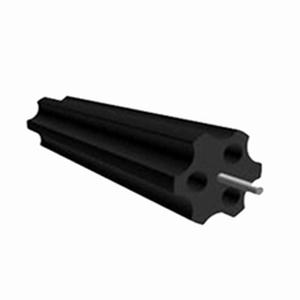
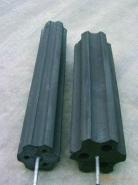
plum blossom-shaped grounding module
Title: Plum Blossom-Shaped Grounding Module, Custom-Made Grounding Module, Non-Metallic Low-Resistance Grounding Module
Keywords: Lightning protection grounding system, high-conductivity grounding module, non-metallic conductor grounding material, physical grounding module, power plant lightning protection grounding, substation lightning protection grounding, electrified railway lightning protection grounding, telecommunications base station grounding, mobile communication base station grounding, microwave relay station grounding, ground satellite receiving station grounding, radar station lightning protection grounding, valuable and precision instrument lightning protection grounding, computer room equipment lightning protection grounding, postal and telecommunications program-controlled equipment lightning protection grounding, radio and television equipment lightning protection grounding, electronic medical equipment lightning protection grounding, high-rise building lightning protection grounding, scenic and ancient building lightning protection grounding, tall memorial tower lightning protection grounding, oil pipeline lightning protection grounding, oil and gas tank lightning protection grounding, flammable and explosive material warehouse lightning protection grounding
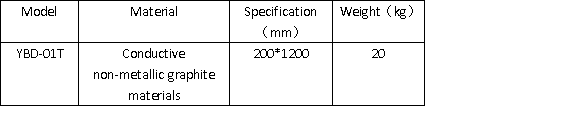
Temperature: -40℃~80℃
Buried Depth: >0.8m
Module Spacing: >3m
Product Certification: ISO 9001:2000
Protection Rating: IP64
Explosion-proof Function: None
Application Scope: Lightning protection grounding
Usage Environment: Any environment
Product Description:
Grounding modules specially customized according to different customer needs and geographical environments.
Grounding modules are developed to adapt to the grounding of modern electrical, communication, and microelectronic facilities. They possess the characteristics of physical resistance reducing agents, are non-toxic, non-corrosive, and do not cause environmental pollution, and have been used in various grounding fields.
The plum blossom-shaped grounding module is a grounding electrode mainly composed of non-metallic materials. It is composed of non-metallic minerals and electrolytic substances with good conductivity and stability, increasing the current dissipation area of the grounding electrode itself, reducing the contact resistance between the grounding electrode and the soil, and having strong moisture absorption and retention capabilities. This reduces the resistivity of the surrounding soil, increases the dielectric constant, reduces interlayer contact resistance, and enhances corrosion resistance, thus achieving lower grounding resistance and a longer service life.
Non-metallic Low-Resistance Grounding Module: This product is a physical low-resistance grounding module. Its graphite material has excellent soil affinity, is non-corrosive, non-degradable, non-polluting, and non-toxic. It exhibits good resistance stability in humid, water-immersed, or deep frozen soil environments, has a long service life, and is suitable for grounding projects involving multi-point construction, complex terrain, and water-scarce areas. In areas with high soil resistivity, it effectively reduces the grounding resistance of the grounding grid. It is also convenient to transport, easy to install, and maintenance-free.
Performance Characteristics:
1. This module uses a chemically stable non-metallic conductor material as the conductive medium, and its conductivity is unaffected by the season.
2. Low resistivity, good anti-magnetic properties, corrosion resistance, non-toxicity, long service life, and easy installation.
3. It can absorb moisture and maintain effective contact with the soil, resulting in low grounding resistance, 22%–40% lower than that of a steel pipe grounding electrode of the same size.
4. It withstands high power frequency and impulse current surges with stable resistance. The resistance does not increase after a large current surge, nor does it harden, become brittle, or break.
5. Grounding in areas with high soil resistivity can effectively reduce the grounding resistance of the grounding grid.
6. Grounding resistance is less affected by seasonal changes, and the resistance value remains stable over a long period. Henan Yangbo Lightning Protection Co., Ltd. specializes in the production of (square, round, and plum blossom-shaped) grounding modules, graphite resistance reducing agents, long-lasting anti-corrosion resistance reducing agents, resistance reducing agents, physical resistance reducing agents, graphite grounding devices, and other lightning protection equipment. We also provide users with various copper-clad steel, grounding electrodes, grounding wires, copper stranded wires, BV two-color grounding wires, grounding connectors, and exothermic welding products. We also undertake the design and installation services for various grounding and lightning protection projects. Our company possesses strong technical capabilities to provide professional lightning protection products and comprehensive lightning protection engineering solutions for domestic and international clients. We warmly welcome inquiries, negotiations, and cooperation from all customers and hope to continuously strengthen and develop our good relationship!
Working Principle
1. Reduced Contact Resistance: The main material of the grounding module has a similar physical structure to soil, allowing it to integrate seamlessly with the soil. This results in a significantly larger effective contact area between the grounding electrode and the soil compared to metal grounding electrodes, greatly increasing the effective current dissipation area and drastically reducing the contact resistance. Therefore, it significantly improves grounding efficiency and reduces the land area occupied by the grounding grid.
2. Stable Grounding Resistance: The grounding module itself has strong moisture absorption and retention capabilities, keeping the surrounding soil moist and ensuring the effective conductivity of the grounding module. Simultaneously, the conductivity characteristics of the conductive materials in the grounding electrode are unaffected by seasonal changes in humidity, temperature, etc., thus providing a stable grounding resistance.
3. Reduced Ground Potential Rise: The non-metallic materials of the grounding module create a relatively smooth, low-resistivity region between the metal and soil, which have vastly different resistivitie. When subjected to high current surges, this reduces the transient potential gradient of the grounding electrode and grounding wire, lowering step voltage and contact voltage, and reducing the probability of ground potential rise. 4. Long Service Life: The main body of the grounding module is made of corrosion-resistant material, and its metal frame uses metal material with an anti-corrosion surface treatment. Therefore, the overall corrosion resistance of this grounding electrode is excellent, and its service life reaches over thirty years.
Construction Method:
1. Before use, the grounding module should be soaked in water for 1-2 hours.
2. Installation Method: Vertical or horizontal burial is acceptable; the burial depth should not be less than 0.8 meters.
3. The distance between modules should not be less than 3 meters.
4. When the module cores are connected in parallel or to the ground wire, welding is mandatory. The weld length should be twice the width of the connecting wire.
5. Weld slag should be removed from the welded areas, and anti-corrosion conductive paint or asphalt paint should be applied.
6. When backfilling with fine soil, water should be sprinkled appropriately, and the soil should be compacted in layers. After the module has fully absorbed moisture (24 hours), the grounding resistance should be measured.
Note: Taking a flat plate type (500*400*60mm) as an example, due to differences in environment between high soil resistivity areas and permafrost areas, as well as differences in design schemes and construction quality, the actual effect may deviate from the theoretical result.
Precautions:
1. The resistance-reducing module should be stored at a certain temperature, avoiding high temperature, dryness, and direct sunlight;
2. Avoid mechanical damage to the module during transportation and installation;
3. In cold regions, the module should be buried below the frost line.
Applications:
1. Working grounding, safety grounding, and lightning protection grounding for power plants, substations, switching stations, high-voltage transmission lines, electrified railways, telecommunications and mobile communication base stations, microwave relay stations, ground satellite receiving stations, radar stations, etc.
2. Working grounding and protective grounding for valuable precision instruments, computer room equipment, postal and telecommunications program-controlled equipment, broadcasting and television equipment, electronic medical equipment, etc.
3. Lightning protection grounding for various high-rise buildings and tall structures, scenic spots and ancient buildings, tall memorial towers, etc.
4. Lightning protection grounding for oil pipelines and oil and gas tanks, and warehouses storing flammable and explosive materials.