
Stainless Steel Ion Grounding Rod
Title: Stainless Steel Electrolytic Ion Grounding Rod, Long-lasting Electrolytic Ion Grounding Rod, Corrosion-resistant Ion Grounding Rod
Keywords: Lightning protection electrolytic ion grounding electrode, stainless steel ion grounding electrode, rust-proof grounding rod, rust-proof grounding electrode, high-efficiency corrosion-resistant ion grounding rod, pole-type ion grounding electrode, lightning protection grounding network stainless steel grounding rod, lightning protection special grounding electrode, stainless steel ion grounding body,
communication lightning protection grounding, power lightning protection grounding, transportation lightning protection grounding, financial lightning protection grounding, petrochemical corrosion-resistant grounding electrode, building lightning protection
corrosion-resistant grounding, power plant lightning protection grounding, substation lightning protection grounding, power line lightning protection grounding, telecommunications bureau lightning protection grounding, mobile base
lightning protection grounding, dispatching room anti-static grounding, highway anti-rust grounding, railway anti-rust grounding, subway anti-rust grounding, chemical plant anti-corrosion grounding, gas station anti-corrosion grounding, oil depot anti-corrosion grounding, military base lightning protection grounding, bank lightning protection grounding, computer room anti-static grounding, intelligent community lightning protection grounding.

Distance: ≥5m
Temperature Range: -40℃~80℃
Product Certification: ISO9001:2000
Protection Rating: IP64
Explosion-proof Function: None
Application: Lightning protection grounding
Usage Environment: Any environment
Stainless steel plasma grounding electrode, reliable quality, high reputation.
Performance Characteristics and Working Principle:
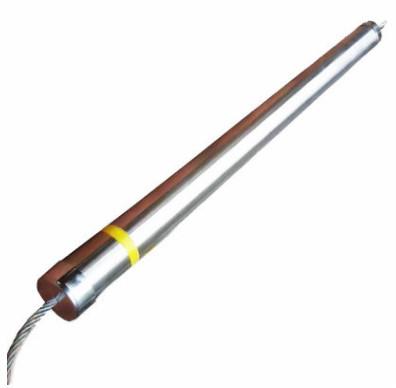
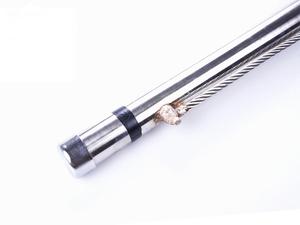
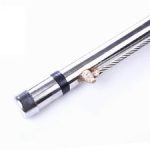
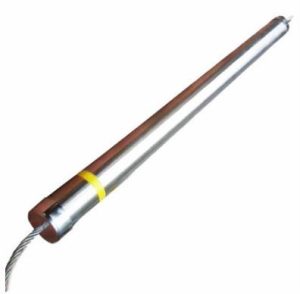
Stainless steel plasma grounding electrodes are a new type of grounding system suitable for various locations with high grounding requirements and complex grounding engineering. This long-term maintenance-free ion grounding electrode electrolytic ion grounding system is composed of advanced alloy compounds, with a copper tube outer layer to ensure high conductivity and a long service life. The conductor’s internal filling material contains a special electrolytic compound that can fully absorb moisture from the air. Through deliquescence, active ions are effectively released into the soil, reacting with moisture in the soil and air, further promoting slow-release resistance reduction on the conductor’s exterior and maintaining long-term resistance stability. The compounds inside the conductor gradually transform into a gel-like transparent state over time. Utilizing the conductivity of the gel-like compound, the entire system can remain in a state of ion exchange for a long period, thus forming an ideal electrolytic ion grounding system. After the slow-release filler inside the conductor is buried, the grounding resistance will gradually decrease, reaching a stable value within six months to 30 years; the burial slow-release process can last for several years. The main connecting components of the stainless steel ion grounding electrode are hot-melt welded, overcoming the loosening issues associated with other connection methods.
Electrolytic ion grounding rods are a novel grounding solution that improves the contact environment between the electrode and the surrounding soil by utilizing the ion release effect of the internal and external filling materials, thus reducing resistance.
Electrolytic ion grounding rods can create a continuous low-resistance grounding environment in areas with high soil resistivity. Even in areas where resistivity fluctuates due to seasonal factors, electrolytic ion grounding rods can ensure stable and reliable low-resistance grounding.
The grounding research conducted by the U.S. National Bureau of Standards from 1910 to 1945 was the longest-running and most extensive. This experiment included 333 different grounding materials, totaling 36,500 samples, spanning 45 regions across the United States and encompassing various soil types. The experiment showed that the average annual corrosion thickness of galvanized steel was 0.065 mm/year, but its average pitting corrosion thickness reached 0.4 mm/year, with the maximum pitting corrosion thickness reaching 1-2 mm/year. However, the maximum average corrosion thickness of copper over 30 years was only 0.17 mm. It is evident that copper grounding electrodes have significantly better corrosion resistance than steel structures.
We can customize grounding rods according to your project’s soil construction conditions, with plating thickness entirely under your control.
More Significant Resistance Reduction:
When used with a resistance-reducing agent, the electrolytic ion grounding electrode continuously absorbs moisture from the soil, providing a low-resistance grounding electrode even in high-resistivity soil environments.
More Stable Resistance Reduction Effect:
It enters a stable state one week after construction, is less affected by temperature and humidity, and the resistance reduction effect can last up to 30 years.
Lower Maintenance Costs:
The resistance-reducing agent filled inside and outside the electrolytic ion grounding electrode continuously releases ions, requiring no special maintenance after installation.
Superior Corrosion Resistance and Conductivity:
Due to the skin effect of current in conductors and the unique corrosion-resistant properties of copper, its conductivity and corrosion resistance are superior to other grounding products.
More Convenient Installation:
Installation is simple and can be done manually or mechanically, making installation more economical.
Longer Service Life:
The maximum thickness of the single-sided copper layer can reach 0.5mm; the theoretical service life of the grounding rod is over 30 years (the service life of the electrolytic ion grounding system will vary depending on the actual soil environment).
Application Cases:
Widely applicable to numerous fields such as communications, power, transportation, finance, petrochemicals, and building systems. Examples include grounding construction or upgrades for power plants, substations, power lines, communication bureaus (stations), mobile base stations, dispatching rooms, highways, railways (subways), chemical plants, gas stations, oil depots, military bases, banks, computer rooms, and smart communities.