
4-Million-Ton Annual Capacity Active Calcium Oxide Project (Longquanshan Lime Calcination) — Comprehensive Intelligent Lightning Protection for the Mine
EPC Project Case Study
Lightning Protection Project Location: Jucheng Town, Pingding County, Yangquan City, Shanxi Province
Project Scope: Turnkey contract covering the supply, civil works, installation, and commissioning of a complete system—including direct lightning protection towers, early streamer emission (ESE) lightning rods, down conductors, advanced grounding materials, power supply surge protection, lightning early warning systems, and intelligent lightning protection systems.
Lightning Protection Contractor: Henan Yangbo Lightning Protection Technology Co., Ltd.
Project Overview
This project involves the calcination facilities for an active calcium oxide plant with an annual capacity of 4 million tons (Phase I). Situated in a region of low-to-medium mountains and hills at an elevation of 707–826 meters with rugged terrain, the site experiences a north-temperate monsoon climate, with the thunderstorm season concentrated between June and August. The subsurface strata consist primarily of gravelly soil, mudstone, and limestone; the high rock content and elevated soil resistivity make it difficult to reduce grounding resistance using conventional construction methods. The plant area features densely packed production equipment and an open, unobstructed layout, resulting in significant risks from direct lightning strikes and induced lightning surges. A lightning strike could easily cause production shutdowns and equipment damage, posing a major safety hazard.
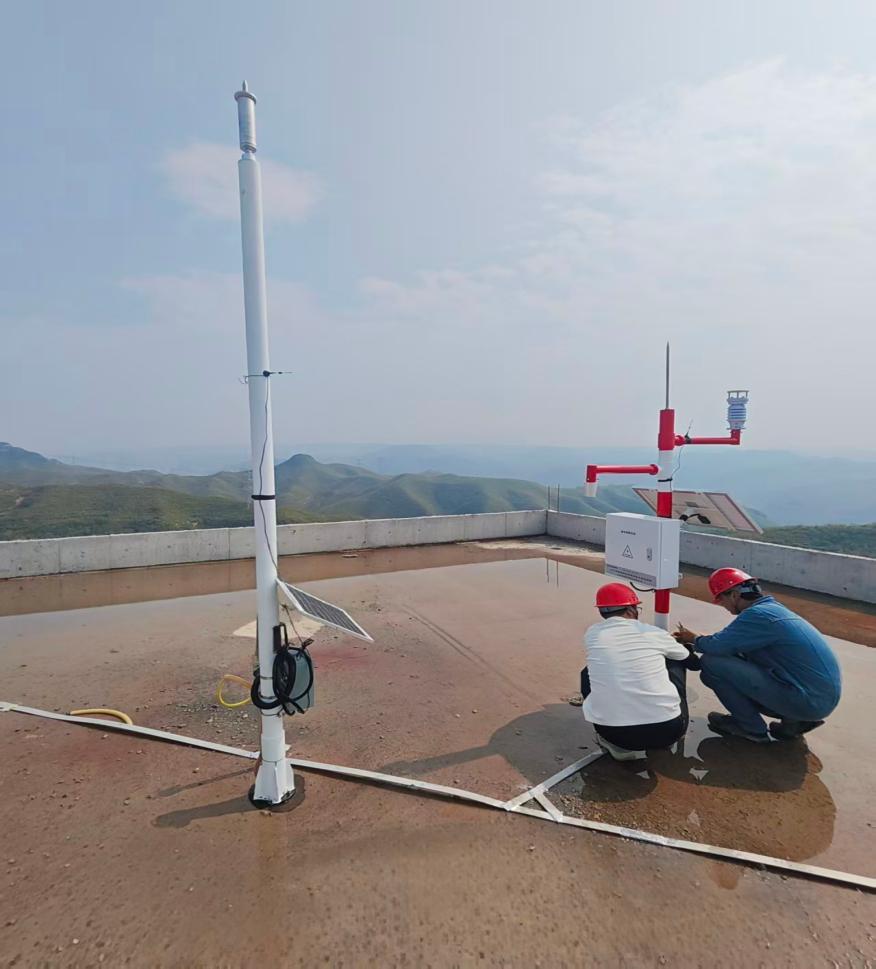
The project strictly adheres to national standards—such as GB 50057-2010 Code for Design Protection of Buildings Against Lightning and GB 50169-2024 Code for Design of Grounding Devices for Electrical Installations—as well as the installation requirements for grounding devices outlined in standard design atlas 99D501-1. It establishes an integrated, closed-loop, intelligent lightning protection system featuring pre-event lightning early warning, active lightning interception during the event, and post-event lightning data collection combined with online monitoring of grounding status. This ensures the entire system is monitorable, capable of issuing early warnings, and traceable. The grounding system is designed to meet a grounding resistance requirement of ≤10Ω, and the project includes obtaining third-party lightning protection inspection and certification.
Yangbo’s Core Lightning Protection Solutions and Key Equipment Specifications
This project involves the deployment of a comprehensive lightning protection system, integrating multiple lightning rod tower units, intelligent multi-parameter meteorological monitoring, a cloud-based atmospheric electric field monitoring system for lightning early warning, and advanced grounding components (including zero-ohm composite grounding bodies, hollow-core ion grounding devices, pure copper ion grounding bodies, and composite grounding systems with resistance-reducing capabilities). The system combines active lightning protection, peak lightning current data acquisition, online grounding resistance monitoring, lightning early warning, and meteorological monitoring.
1.Direct Lightning Protection System
1) Non-air-terminal active lightning protection device
Lightning discharge capacity ≥ 200 kA; air-terminal triggering electric field strength ≥ 8.5 kV/cm; protection angle ≥ 85°; insulation resistance ≥ 10 GΩ (at 2.5 kV); equipped with a fiberglass (FRP) side-flash protection rod and a 50 mm² pure copper down-conductor connecting to the tower body.
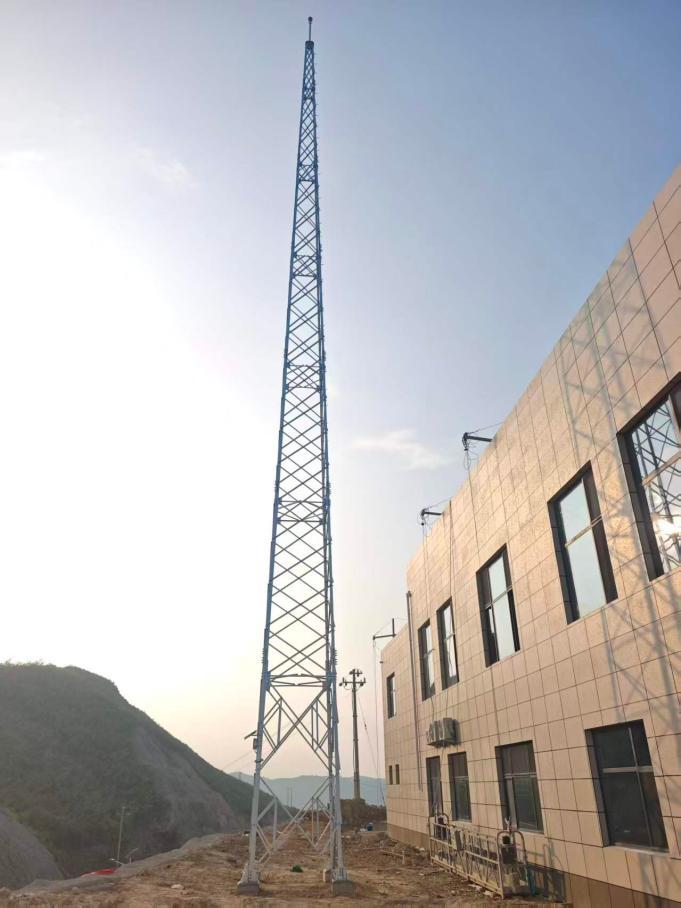
2) 35-meter GFL2 series four-leg angle-steel lightning protection tower
Designed in accordance with the 99D501-1 standard atlas; tower verticality deviation ≤ 1/1000 of the tower height (maximum allowable deviation at the top ≤ 35 mm); tower body equipped with a peak lightning current monitoring unit; base equipped with an explosion-proof online grounding resistance monitoring unit; tower foundation constructed using C30 cast-in-place concrete, strictly adhering to the civil engineering standards specified in the atlas.
2. Intelligent Monitoring and Early Warning System
1) Lightning Early Warning Device (with multi-parameter meteorological monitoring)
Features a 15 km detection radius and supports three-level tiered alarms. It integrates data on lightning current peaks and grounding resistance, allows for the expansion of meteorological data collection to 13 parameters, and is designed for installation in open areas to avoid interference from metal obstructions, enabling the proactive assessment of risks associated with thundercloud activity.
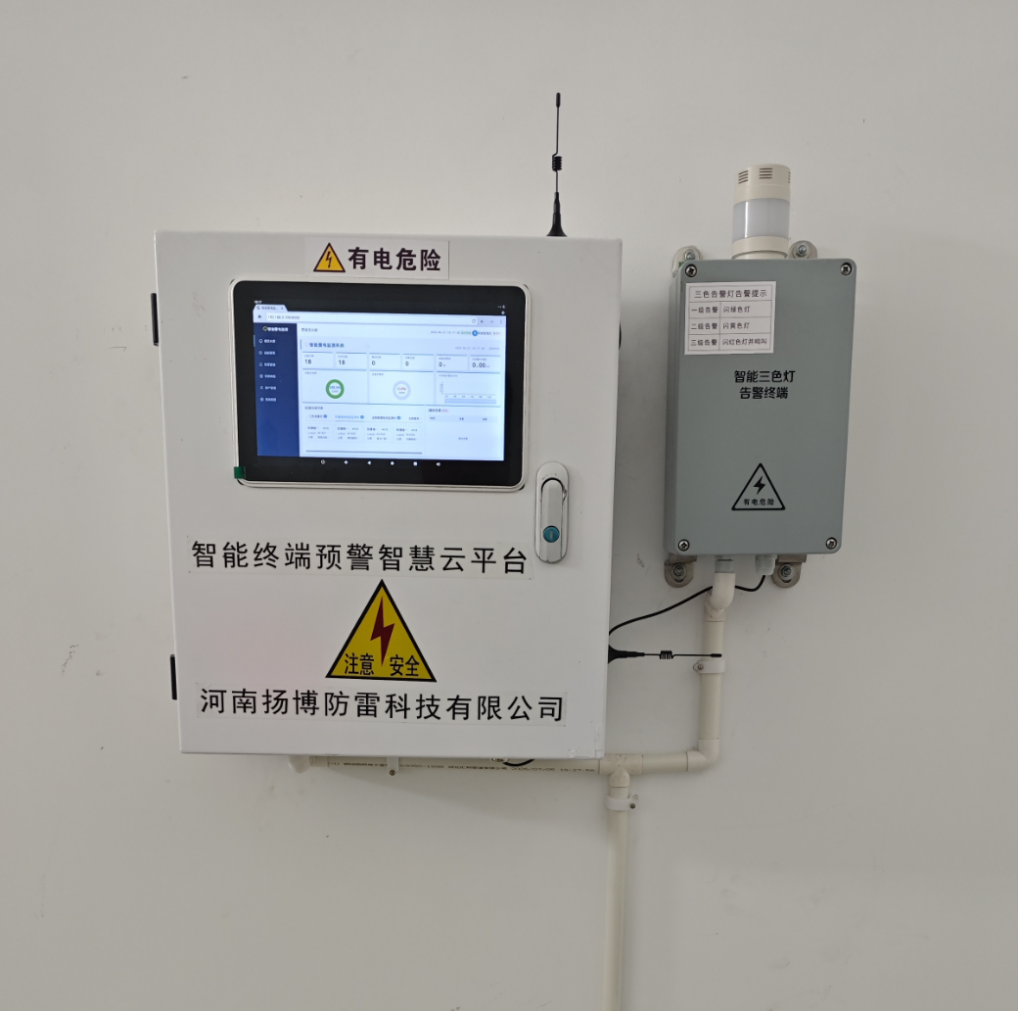
2)Smart Terminal Early Warning Cloud Platform
Supports both private (on-premise) and cloud-based login. It provides real-time data visualization for lightning warnings, multi-parameter meteorological conditions, lightning peak currents, and grounding resistance. Key features include real-time trend graphing, alarm history retrieval, and a programmable touchscreen interface; the system supports future functional upgrades and pushes instant notifications in the event of abnormal conditions.
3) Intelligent Lightning Peak Monitoring Unit
Features a built-in Rogowski coil; measurement range of 1–200 kA with 0.1 kA resolution; supports identification of 10/350 μs and 8/20 μs surges; maximum count of 9,999 events; capable of identifying up to 20 consecutive pulses; performs statistical classification based on lightning current amplitude and polarity; and provides comprehensive records of strike time, peak value, energy, and steepness, enabling the digital archiving of lightning strike events.
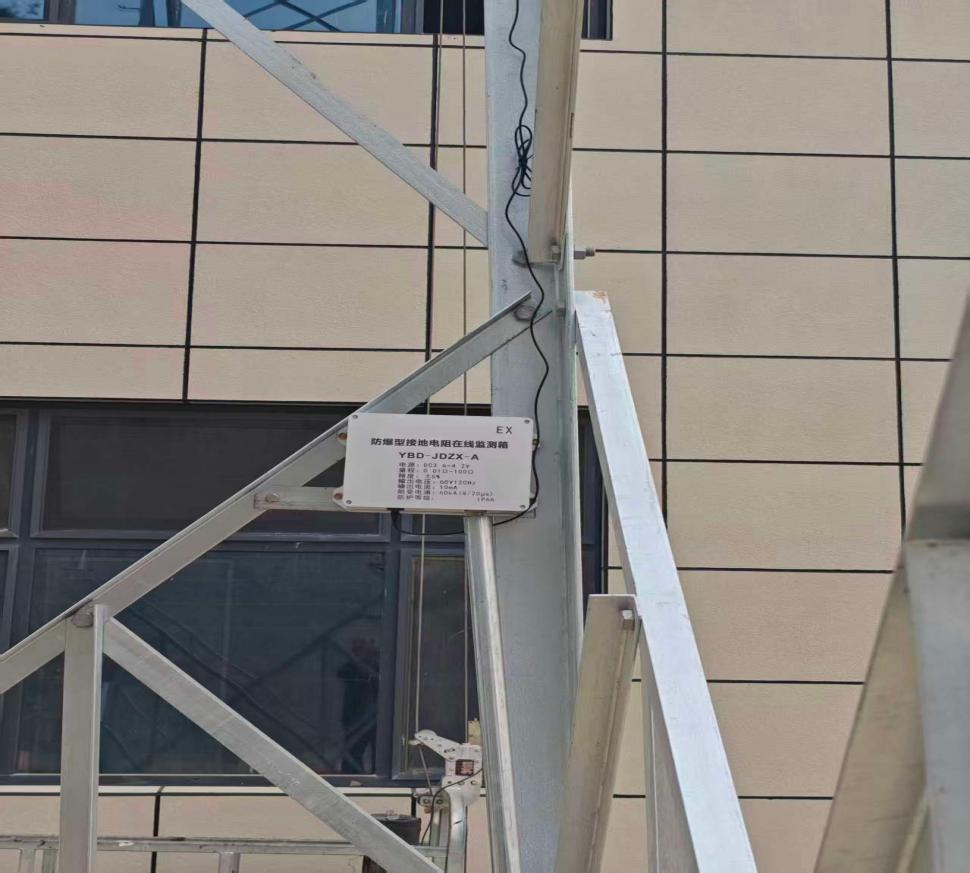
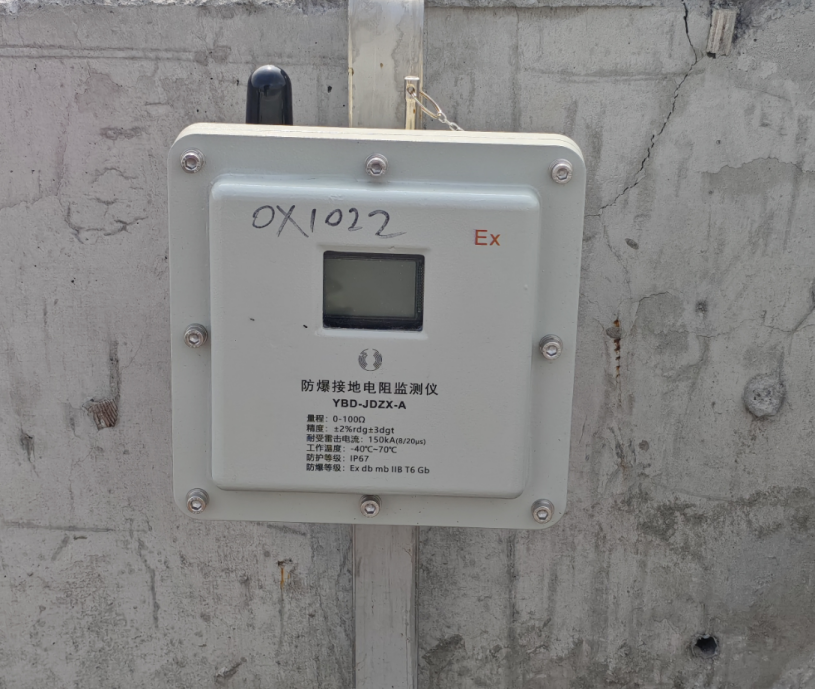
4)Explosion-proof online monitoring enclosure for grounding resistance
Three-pole measurement method; resolution of 0.01Ω, accuracy of ±2% of reading ±3 digits; measurement range of 0–20Ω; powered independently by solar energy. It provides 24-hour continuous monitoring of the grounding grid status, automatically triggering an alarm if grounding resistance exceeds limits, thereby offering timely warnings regarding potential corrosion or failure of the grounding grid.
Loop-based online grounding resistance monitor: Designed specifically for explosion-proof environments or specialized applications, this device is primarily used to monitor the connection status of grounding down-conductors, grounding resistance, and metal bonding resistance in real-time. Utilizing non-contact measurement technology, it eliminates the need for self-test routines and avoids the cumbersome wiring disconnection and on-site installation work associated with traditional contact-based methods, thus meeting the requirements for safe and efficient monitoring in explosion-proof settings.
3. Composite Low-Resistance Grounding System (Custom-designed for lightning protection grounding in mountainous rocky terrain)
To address the high-resistivity soil conditions characterized by limestone and mudstone at the project site, a combined grounding scheme is adopted, utilizing ionic grounding devices, “Zero-Ohm” composite grounding electrodes, and high-purity resistivity-reducing conductive materials. Horizontal grounding electrodes are buried at a depth of ≥1.5 m, and hollow-core ionic grounding devices are buried at depths exceeding 1.5 m to ensure long-term grounding stability.
Hollow-core ionic grounding device: Dimensions of 400×300×55 mm; features a stainless steel casing reinforced with titanium alloy; contains an internal moisture-retaining, resistivity-reducing agent formulated with 46% nitrogen, potassium, and chlorine to enhance the conductivity of the surrounding soil; installed using horizontal welding techniques.
“Zero-Ohm” composite grounding electrode: Specifications of Φ78×1000 mm; features an internal pure copper core for conductivity; flexural strength ≥13.7 MPa; installed vertically.
Yangbo high-purity resistivity-reducing conductive material: Graphite carbon content >65%; packaged in 10 kg bags; applied with a thickness of ≥10 cm for horizontal electrodes and a filling thickness of ≥10 cm around vertical electrodes; non-polluting, providing long-lasting moisture retention and conductivity.
Stainless steel flat bar (40×4 mm): Serves as the horizontal grounding connection busbar.
Following installation, the grounding resistance of the entire system is maintained at ≤10 Ω, effectively overcoming the challenges of reducing resistance in rocky mountainous terrain and ensuring the rapid dissipation of lightning currents into the earth.
Key Points for Construction Implementation
1.Lightning Arrester Tower Foundation Construction: After excavating the foundation pit, lay a crushed stone bedding layer, tie the rebar mesh, precisely position the anchor bolts, and pour C30 concrete; proceed with tower hoisting only after the concrete strength reaches at least 70%; tighten M24 bolts to a torque of 300–400 N·m; verify tower verticality using a theodolite.
2.Grounding Construction: Avoid underground utilities when drilling and installing vertical grounding electrodes, ensuring reliable electrical connections between grounding units; backfill the area around the electrodes with high-purity, conductive, resistance-reducing material, compacting it in layers to ensure intimate contact between the electrodes and the soil.
3.Equipment Installation and Commissioning: Ensure waterproofing for lightning peak monitoring boxes and grounding monitoring boxes, and install surge protection for RS485 communication lines; select an open, unobstructed site for the atmospheric electric field meter; integrate all equipment parameters into the cloud platform, configure tiered alarm thresholds, and test all alarm functions.
4.Documentation and Handover: Provide a complete set of product certificates, third-party test reports, and as-built drawings; complete the specialized lightning protection inspection and acceptance process within 60 days of project completion and commissioning, and submit a comprehensive inspection report for the lightning arrester tower system issued by a qualified third-party testing agency.
Lightning Protection Project Deliverables
✅ Comprehensive EPC delivery: Encompassing equipment supply, civil foundation work, hoisting and installation, and integrated system commissioning;
✅ Intelligent integration: Features advanced lightning warning capabilities, comprehensive logging of lightning events, and real-time online monitoring of the grounding grid—overcoming the limitations of traditional lightning protection systems that offer protection without status awareness;
✅ Adaptable to complex mountainous terrain: Achieves compliant grounding resistance metrics and meets safety production standards for lime industry facilities;
✅ Certification and documentation: Upon completion, the system undergoes official inspection and certification by a qualified third-party lightning protection testing agency, with a full set of technical documentation provided for acceptance.
Value of Lightning Protection System Installation
This project serves as a model case for intelligent lightning protection at an industrial site dedicated to lime calcination at a mine. It overcomes the challenges of achieving effective grounding and resistance reduction in rocky, mountainous terrain. Moving beyond conventional passive lightning interception, the project integrates early warning, protection, monitoring, and source tracing to establish a comprehensive lightning safety barrier for high-temperature, high-risk industrial facilities, offering a mature and replicable engineering reference for similar lightning protection projects in the mining, building materials, and metallurgical sectors.